Historians & Sources

Meet the scholars, archivists, and institutions whose work informs the travel notes and historical context in this sabbatical journal.
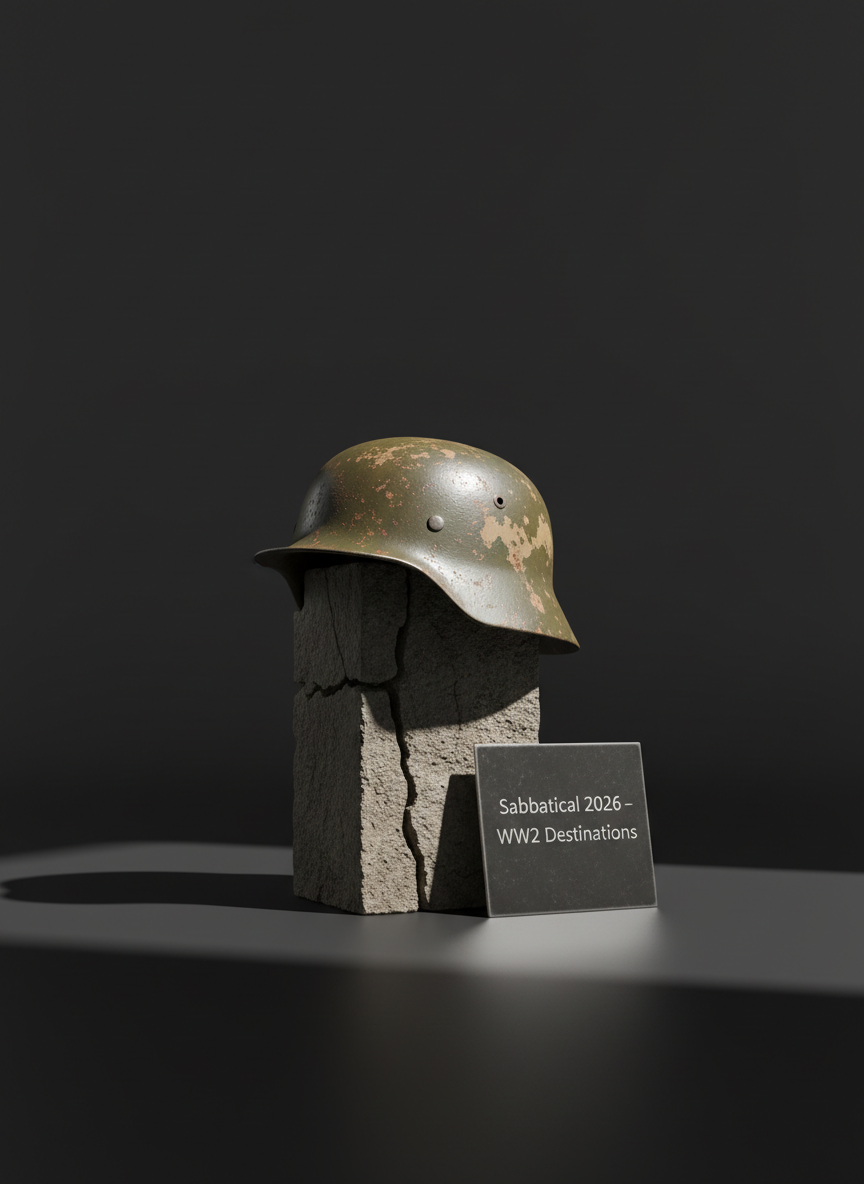
A solitary, intricately detailed WW2 steel helmet resting atop a cracked stone pedestal, the metal surface showing scuffs, subtle rust, and faded paint, yet meticulously clean of dirt. Behind it, leaning against the pedestal, a minimalist, partially visible sign with the engraved words “Sabbatical 2026 – WW2 Destinations.” A razor-sharp beam of side light from the left slices across the helmet, creating defined highlights and crisp, elongated shadows that fall onto a smooth, dark floor. The background is intentionally bare and deep charcoal, amplifying the helmet’s stark silhouette. Shot from a low angle to give the object gravitas, this photographic image conveys a bold, contemplative atmosphere ideal for a blog about WW2 heritage travel.

Historians & sources

We spotlight key historians, authors, and institutions whose research guides this blog, helping serious readers trust our WW2 perspectives.
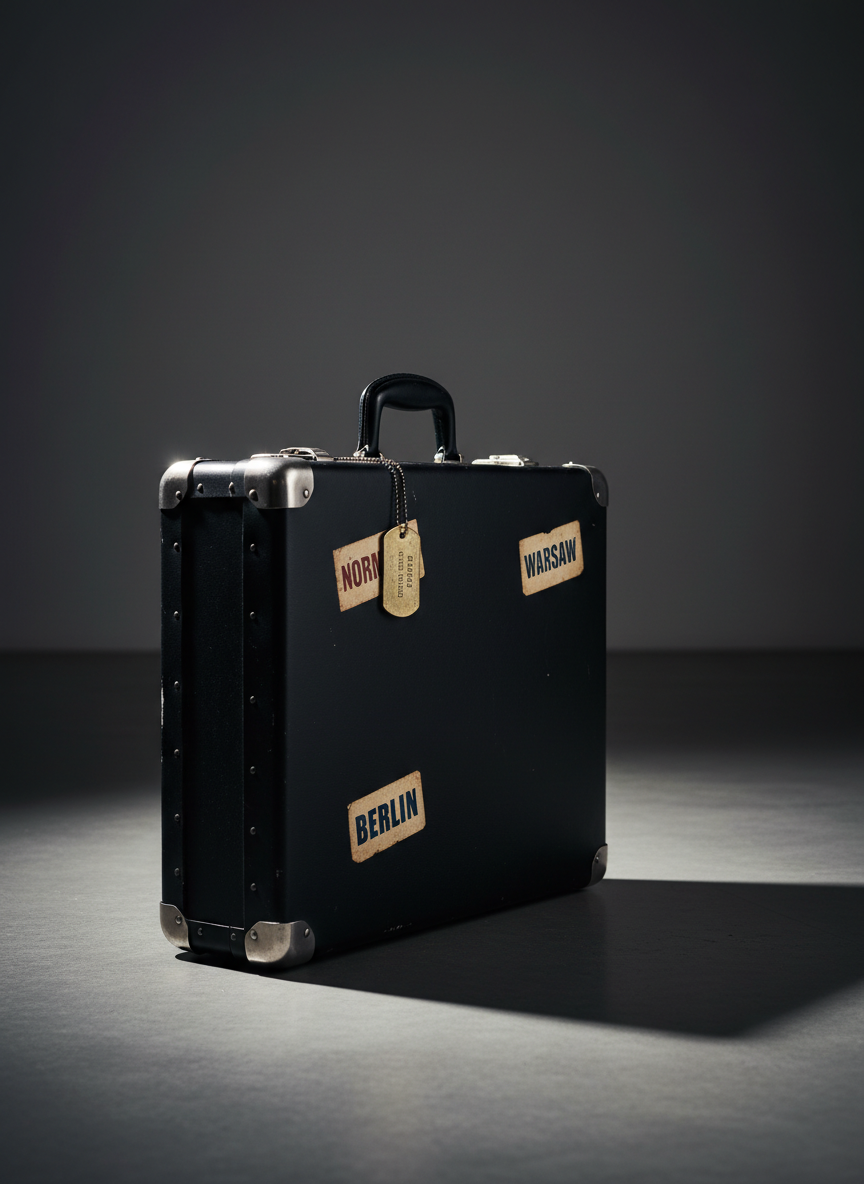
A sleek, matte-black vintage-style suitcase with reinforced metal corners, adorned with minimal WW2-era destination labels like “Normandy,” “Berlin,” and “Warsaw,” stands upright on a smooth concrete floor. A single, detailed brass dog tag hangs from the handle, catching the light. Harsh, directional lighting from above-left casts strong, crisp shadows to the right, carving out the contours of the suitcase and emphasizing its rugged texture. The background is stark and uncluttered, fading to deep gray, creating a minimalist, high-impact studio environment. Captured at eye level with sharp focus and tight framing, the photographic image feels bold, modern, and purposeful, perfectly suited as a hero image for a sabbatical travel blog about WW2 destinations.
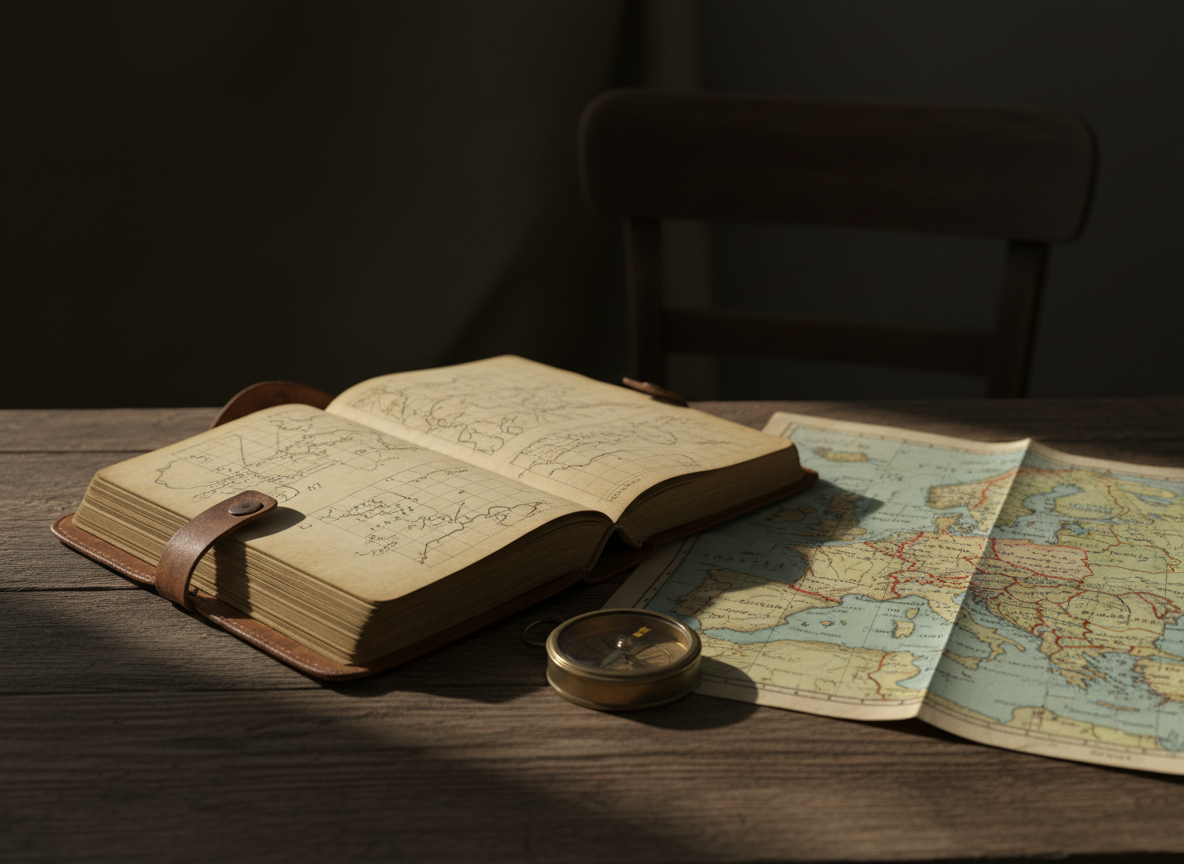
A weathered World War 2 leather field journal lying open on a rough, dark wooden table, its yellowed pages filled with faint pencil maps and coordinates. Beside it rests a tarnished brass compass and a neatly folded, faded military map of Europe marked with red pencil lines. Sharp, directional light from the right cuts across the scene, casting crisp, dramatic shadows that emphasize every crease and scratch. The background is minimalist and shadowed, with no distractions, creating a bold, high-impact composition. Shot at a slightly elevated, three-quarter angle with shallow depth of field, in photographic realism, conveying a sense of focused determination and historical discovery for a WW2 travel blog.
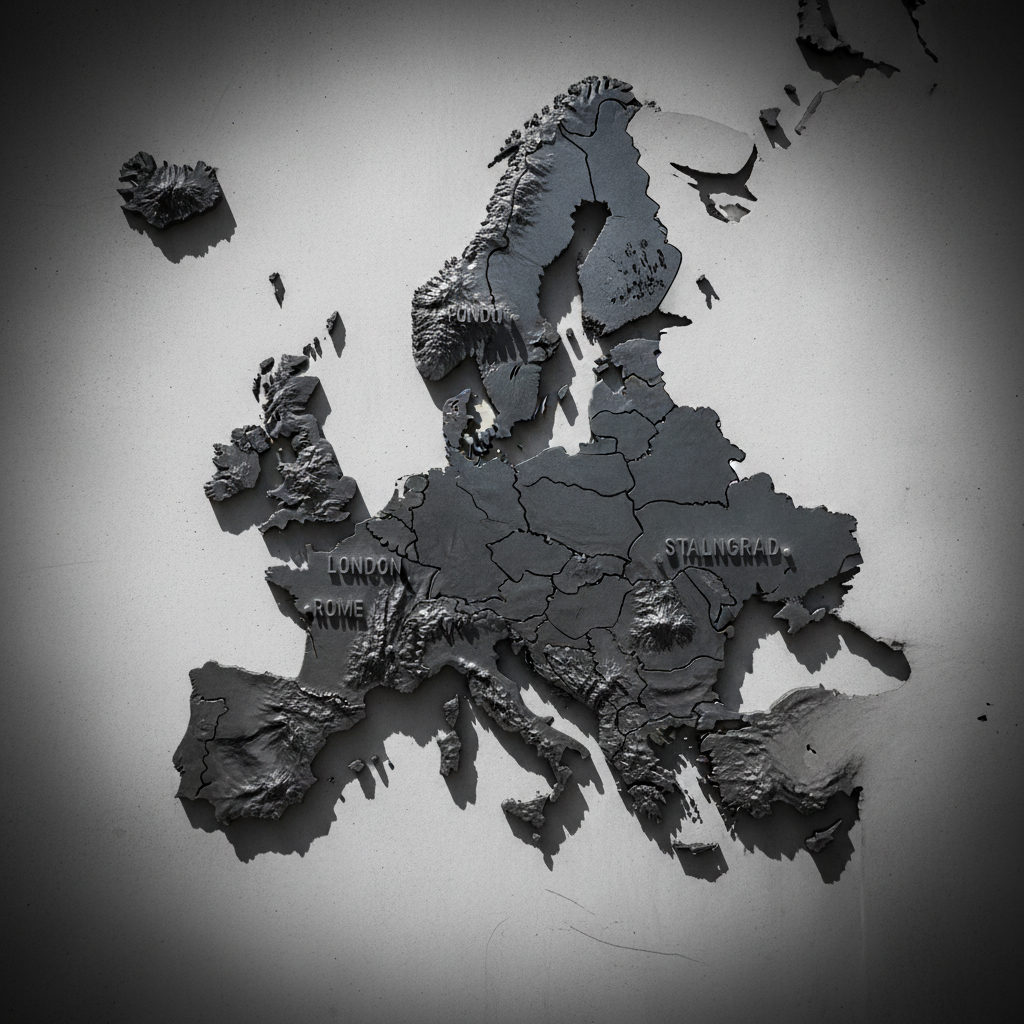
A detailed, three-dimensional relief map of Europe during World War 2, crafted from matte metal in dark gunmetal tones, mounted on a smooth, light concrete wall. Key WW2 cities such as London, Stalingrad, and Rome are raised and subtly labeled in minimalist typography. A strong, directional spotlight from the upper right creates dramatic, razor-sharp shadows that extend across the wall, exaggerating the contours of borders and front lines. The composition is centered and tightly cropped, with a shallow vignette to keep focus on the metallic map. The photographic style is stark, clean, and modern, radiating a bold, analytical mood that reflects strategic exploration of WW2 travel routes.
A solitary, intricately detailed WW2 steel helmet resting atop a cracked stone pedestal, the metal surface showing scuffs, subtle rust, and faded paint, yet meticulously clean of dirt. Behind it, leaning against the pedestal, a minimalist, partially visible sign with the engraved words “Sabbatical 2026 – WW2 Destinations.” A razor-sharp beam of side light from the left slices across the helmet, creating defined highlights and crisp, elongated shadows that fall onto a smooth, dark floor. The background is intentionally bare and deep charcoal, amplifying the helmet’s stark silhouette. Shot from a low angle to give the object gravitas, this photographic image conveys a bold, contemplative atmosphere ideal for a blog about WW2 heritage travel.

Helpful and insightful.


— Aya Nakamura

Feedback Form

Share ideas for WW2 locations, sources, or corrections to help keep this resource accurate and useful for travelers and history enthusiasts.

Your input shapes future posts, guides, and references as David explores landmark battlefields, museums, and memorials across 2026.

← Back

Thank you for your response. ✨

A sleek, matte-black vintage-style suitcase with reinforced metal corners, adorned with minimal WW2-era destination labels like “Normandy,” “Berlin,” and “Warsaw,” stands upright on a smooth concrete floor. A single, detailed brass dog tag hangs from the handle, catching the light. Harsh, directional lighting from above-left casts strong, crisp shadows to the right, carving out the contours of the suitcase and emphasizing its rugged texture. The background is stark and uncluttered, fading to deep gray, creating a minimalist, high-impact studio environment. Captured at eye level with sharp focus and tight framing, the photographic image feels bold, modern, and purposeful, perfectly suited as a hero image for a sabbatical travel blog about WW2 destinations.